• tel 8613931787312
  • address
    Botou Industrial Zone on the east side of National Highway 104, Botou City, Hebei Province
0%

Table of Contents

The advent of the metal laser welding machine has revolutionized numerous industries, offering precision, speed, and efficiency previously unattainable with traditional welding methods. Its ability to join dissimilar metals and create deep, narrow welds with minimal heat affected zones has broadened its application scope immensely. Understanding the principles and capabilities of this technology is crucial for businesses looking to optimize their manufacturing processes and stay competitive in a rapidly evolving global market.

The global demand for high-quality, reliable welding solutions is steadily increasing, driven by growth in sectors like automotive, aerospace, and medical device manufacturing. According to reports from the International Organization for Standardization (ISO), the implementation of automated welding technologies, like laser welding, significantly improves product quality and reduces production costs. This makes the metal laser welding machine a vital tool for companies navigating these challenges.

The increasing complexity of modern manufacturing requires welding techniques that can handle intricate designs and demanding material properties. The metal laser welding machine addresses these needs by providing a highly controllable and versatile welding process, capable of creating welds in challenging geometries and with a wide range of materials. This ensures that manufacturers can meet the evolving demands of their customers and maintain a leading edge in their respective industries.
Revolutionizing Industries with Advanced Metal Laser Welding Machine Technology

Introduction to metal laser welding machine

Revolutionizing Industries with Advanced Metal Laser Welding Machine Technology

The metal laser welding machine represents a significant advancement in joining technology, offering unparalleled precision and control. This technology utilizes a highly focused laser beam to melt and fuse metal parts together, creating strong and durable welds with minimal distortion. Its adoption has become increasingly prevalent across numerous industries due to its distinct advantages over conventional welding processes.

Unlike traditional methods, laser welding minimizes the heat-affected zone, resulting in reduced material stress and improved weld quality. This is particularly crucial in applications where maintaining the integrity of the base material is paramount. Furthermore, the non-contact nature of the process eliminates the need for filler metals in many applications, streamlining the welding process and reducing material costs.

Defining metal laser welding machine

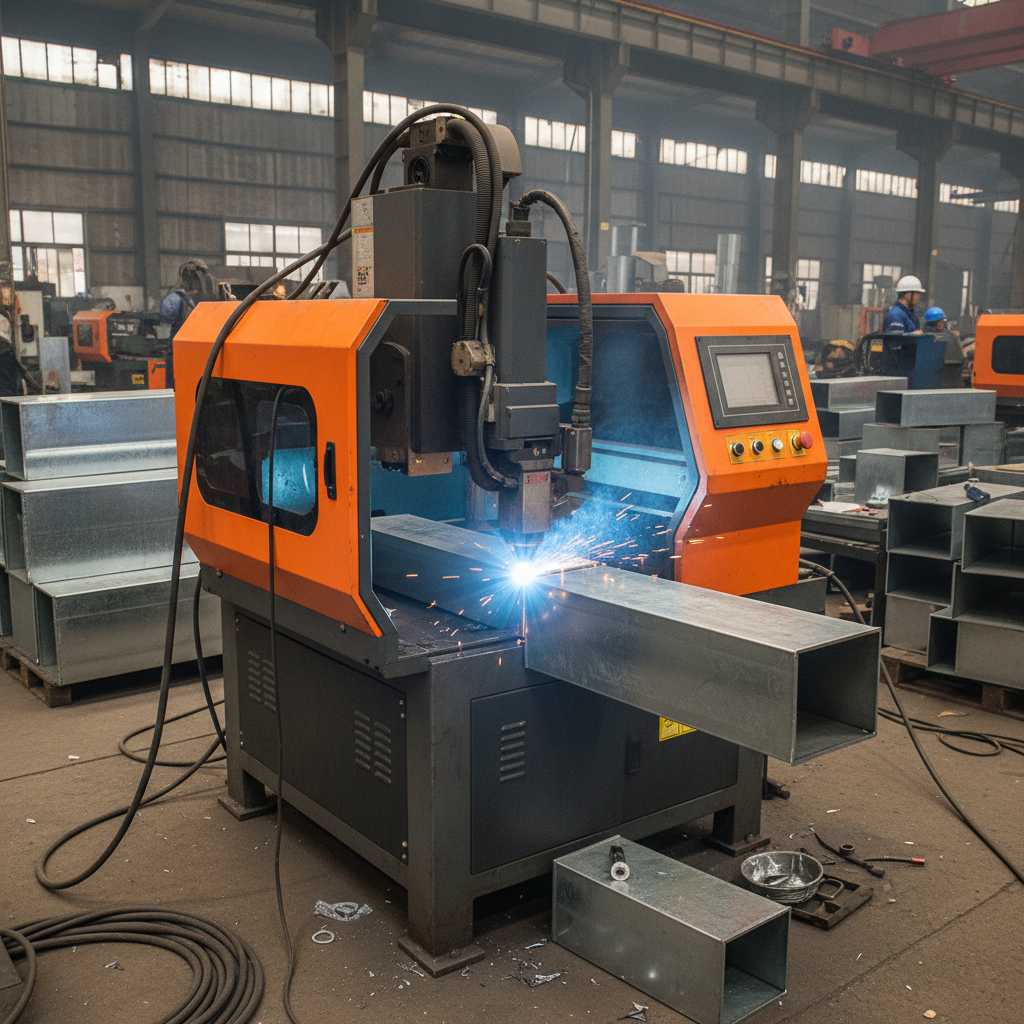
A metal laser welding machine is a sophisticated system that employs a focused laser beam to melt and join metal materials. The process occurs by directing the high-energy laser onto the joint between two or more metal parts, causing them to melt and fuse together as the laser beam moves along the desired weld path. The precision and control offered by laser technology allow for the creation of narrow, deep welds with exceptional strength and quality.

This technology bridges the gap between industrial efficiency and the need for precision in critical applications. It's fundamentally different from processes like arc welding or resistance welding, which rely on physical contact and generate broader heat-affected zones. The metal laser welding machine directly addresses the growing demand for automated, high-throughput welding solutions in modern manufacturing.

The application of metal laser welding extends beyond simple fabrication. It plays a vital role in industries demanding high precision and reliability, from the creation of complex electronic components to the manufacturing of aerospace structures. This versatility makes it a cornerstone of innovation in the modern industrial landscape.

Core Components and Operational Principles

The core of a metal laser welding machine consists of several key components. These include the laser source (typically fiber or CO2 lasers), a beam delivery system (including mirrors and lenses), a motion control system, and a control console for precise parameter adjustment. The laser source generates the high-energy beam, while the beam delivery system focuses it onto the workpiece.

Operationally, the process involves carefully controlling several parameters, including laser power, welding speed, focus spot size, and shielding gas flow. Shielding gases, like argon or helium, are crucial for protecting the weld pool from atmospheric contamination, ensuring weld integrity. Precise control over these parameters allows for optimization of the welding process for different materials and applications.

Furthermore, advanced metal laser welding machine systems often incorporate sophisticated sensors and feedback loops to monitor and adjust welding parameters in real-time. This ensures consistent weld quality and minimizes the risk of defects, even under varying conditions. The integration of these technologies underscores the sophisticated nature of modern laser welding equipment.

Key Benefits of Utilizing metal laser welding machine

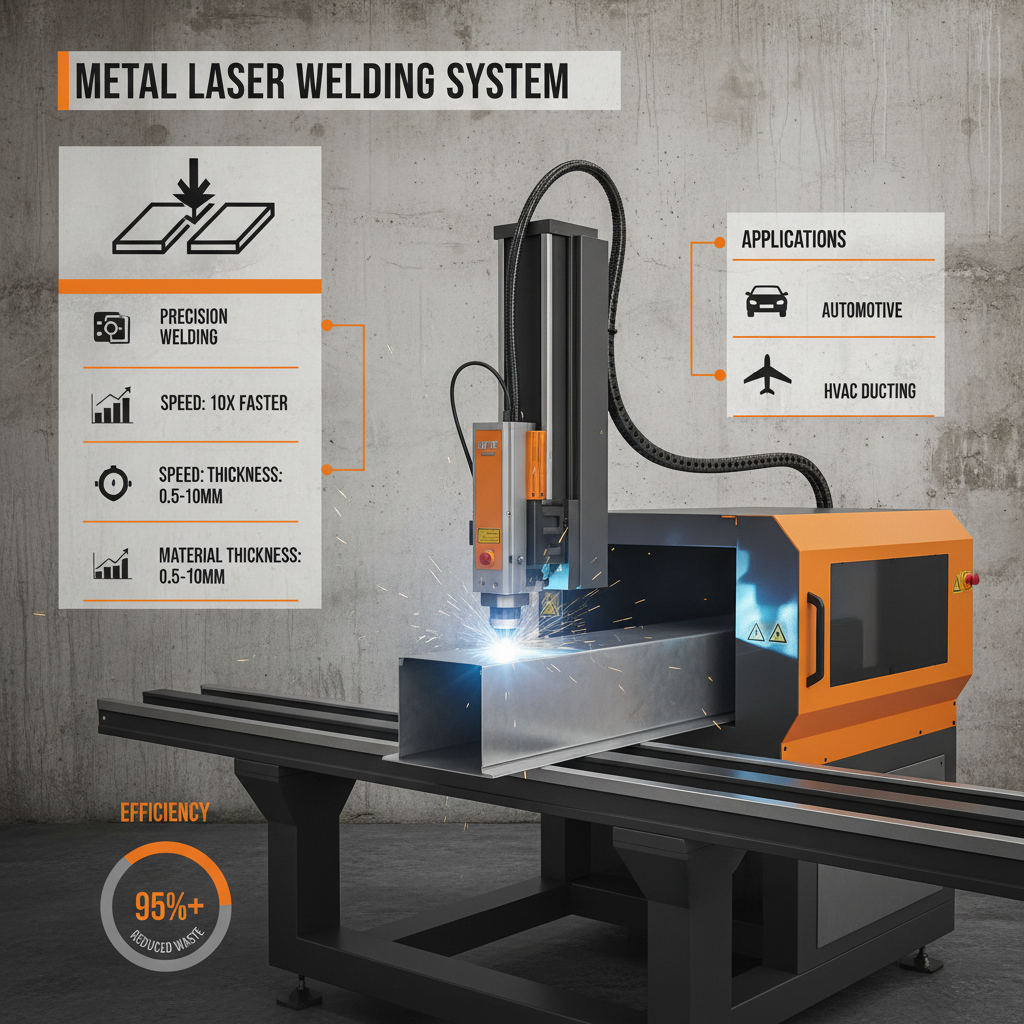
The adoption of a metal laser welding machine offers a plethora of advantages. One of the most significant is the exceptional weld quality achieved, characterized by minimal distortion and a narrow heat-affected zone. This translates to stronger, more durable welds with improved mechanical properties.

The speed and efficiency of laser welding also contribute to significant cost savings. The process is considerably faster than traditional welding methods, reducing cycle times and increasing production throughput. This, combined with reduced material waste and lower operating costs, makes laser welding a highly economically viable option for many applications.

metal laser welding machine Performance Metrics


Global Applications of metal laser welding machine

The metal laser welding machine finds extensive applications across a diverse range of industries worldwide. In the automotive sector, it's used for welding components like transmission parts, exhaust systems, and body panels, where precision and reliability are critical. The aerospace industry utilizes laser welding for manufacturing aircraft engines and structural components.

Medical device manufacturers leverage laser welding for creating intricate surgical instruments and implantable devices, benefiting from the process's precision and ability to weld dissimilar metals. In electronics, laser welding is used for joining micro-components and creating hermetic seals. These applications demonstrate the technology’s broad utility and importance.

Advantages and Long-Term Value

Beyond immediate cost savings and efficiency gains, the metal laser welding machine offers significant long-term value. The enhanced weld quality and durability translate to reduced maintenance requirements and extended product lifecycles. The minimized heat-affected zone also contributes to reduced material distortion and improved structural integrity.

From a sustainability perspective, laser welding's reduced energy consumption and material waste contribute to a lower environmental footprint. This aligns with the growing global emphasis on eco-friendly manufacturing practices. Investing in laser welding technology is therefore not only a strategic business decision but also a commitment to responsible manufacturing.

The reliability and precision of metal laser welding fosters trust in product quality. This builds brand reputation and customer loyalty, ultimately contributing to long-term business success.

Future Trends and Innovations

The future of metal laser welding machine technology is poised for further innovation. Ongoing research is focused on developing more powerful and efficient laser sources, such as disc lasers and slab lasers. These advancements will enable welding of even thicker materials and at higher speeds.

Another key trend is the integration of artificial intelligence (AI) and machine learning (ML) into laser welding systems. AI-powered systems can analyze welding parameters in real-time and optimize them for optimal weld quality and efficiency. The development of remote monitoring and control capabilities will further enhance the usability and accessibility of this technology.

Furthermore, the demand for sustainable manufacturing practices is driving research into laser welding techniques that minimize energy consumption and material waste. This includes the development of new shielding gas mixtures and optimized welding strategies.

FAQS

What materials can be effectively welded using a metal laser welding machine?

A metal laser welding machine is incredibly versatile and can weld a broad range of metals, including stainless steel, aluminum, titanium, carbon steel, and even dissimilar metal combinations. The specific parameters, like laser power and welding speed, are adjusted based on the material properties to achieve optimal weld quality. Its adaptability makes it suitable for applications across diverse industries, from aerospace to medical device manufacturing.

What is the typical maintenance schedule for a metal laser welding machine?

Regular maintenance is crucial for ensuring the longevity and performance of your metal laser welding machine. Typically, this involves cleaning the optics (lenses and mirrors) weekly, inspecting the beam delivery system monthly, and conducting a comprehensive system check-up annually. Replacing consumable parts, such as nozzles and shielding gas filters, should be done as needed based on usage and wear. Following a preventative maintenance schedule will minimize downtime and maximize efficiency.

What are the safety precautions needed when operating a metal laser welding machine?

Safety is paramount when operating a metal laser welding machine. Always wear appropriate personal protective equipment (PPE), including laser safety glasses designed for the specific wavelength of the laser. Ensure the welding area is properly ventilated to remove fumes and particles. Implement safety interlocks and barriers to prevent accidental exposure to the laser beam. Proper training and adherence to safety protocols are essential for preventing accidents.

How does the cost of a metal laser welding machine compare to traditional welding methods?

The initial investment for a metal laser welding machine is typically higher than that of traditional welding equipment. However, the long-term cost of ownership can be lower due to reduced operating costs, increased efficiency, and minimized material waste. Laser welding requires less filler metal, consumes less energy, and produces higher-quality welds, leading to reduced rework and maintenance. The overall return on investment often justifies the higher upfront cost.

What level of operator skill is required to operate a metal laser welding machine effectively?

While modern metal laser welding machines are becoming increasingly automated, some level of operator skill is still required. Operators need to understand the principles of laser welding, material properties, and process parameters. Proper training is essential for setting up the machine, adjusting parameters, and monitoring the welding process. Advanced systems with AI-powered features can simplify operation and reduce the need for highly specialized skills.

What is the typical power consumption of a metal laser welding machine?

The power consumption of a metal laser welding machine varies depending on its size, laser source type, and operating parameters. Smaller, fiber laser machines typically consume between 3-8 kW, while larger CO2 laser machines can consume upwards of 10-20 kW. However, laser welding is often more energy-efficient than traditional welding methods, as it requires less energy to achieve the same weld quality. Modern machines are designed with energy-saving features to minimize power consumption.

Conclusion

In conclusion, the metal laser welding machine represents a transformative technology in the field of metal joining. Its precision, efficiency, and versatility offer significant advantages over traditional welding methods, driving innovation across diverse industries. From automotive and aerospace to medical device manufacturing and electronics, the applications of this technology are continually expanding, solidifying its position as a cornerstone of modern manufacturing.

Looking ahead, continued advancements in laser technology, coupled with the integration of AI and machine learning, promise even greater improvements in weld quality, efficiency, and automation. Investing in a metal laser welding machine is not just an investment in a piece of equipment; it's an investment in the future of your manufacturing processes, enabling you to stay competitive, improve product quality, and embrace sustainable manufacturing practices. Visit our website: www.xdrmachinery.com to learn more.
Michael Johnson

Michael Johnson

Michael Johnson is a Quality Control Supervisor at Hebei Xindrui Machinery, responsible for ensuring all products meet rigorous quality standards. A meticulous professional with 10 years of experience in manufacturing, Michael oversees the inspection process for metal containers, from paint barrels to fire extinguisher boxes. He has implemented several new
Previous Revolutionizing Ductwork Fabrication With Precision and Efficiency
Next Advancements in Steel Laser Welding Machine Technology and Industrial Applications