-
 8613931787312
 -
 Botou Industrial Zone on the east side of National Highway 104, Botou City, Hebei Province


Advancing Industrial Welding: The Role of Automatic Seam Welding Machines
In the fast-paced manufacturing sector, the demand for efficient, precise, and consistent welding solutions is higher than ever. Among the many innovations transforming production lines, the automatic seam welding machine, also known as the automatic seam welder, has become a cornerstone for industries that require high-quality, airtight, and durable welded seams. From metal packaging to industrial containers, these machines have made large-scale production faster, safer, and more cost-effective.
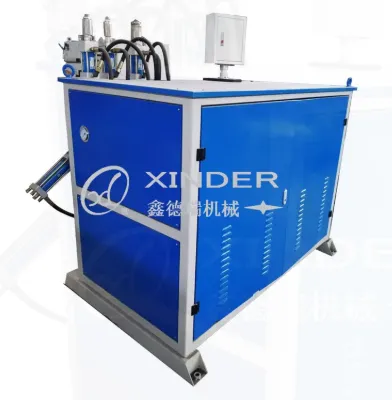
Understanding Automatic Seam Welding Technology
Automatic seam welding is a specialized process designed to join two overlapping metal sheets or components along a continuous, uniform seam. Unlike spot welding, which joins materials at discrete points, seam welding ensures a leak-proof and smooth finish, making it ideal for containers, tanks, and sealed metal components.
The automatic seam welder operates by feeding materials between rotating electrodes, which generate the necessary heat through electrical resistance. With computer-controlled settings, it guarantees consistent weld quality across large batches without the fatigue or variability of manual labor.
Modern fully automatic seam welding machines offer programmable parameters for different material thicknesses, widths, and welding speeds, ensuring flexibility in production. These advancements have positioned seam welders as essential tools in industries such as:
Food and beverage packaging (metal cans, drums)
Automotive fuel tanks and exhaust systems
Air conditioning components
Cylindrical and conical containers
The Advantages of Fully Automatic Seam Welding Machines
The transition from manual or semi-automatic to fully automatic seam welding machines has yielded significant productivity and quality improvements. These benefits include:
High Precision: Computer-controlled operation ensures uniform heat application and exact seam positioning.
Enhanced Efficiency: Continuous welding without manual repositioning drastically reduces cycle time.
Consistency Across Batches: Automatic systems eliminate human error, ensuring identical output in every unit.
Versatility: Adjustable parameters allow welding of different metals, including steel, aluminum, and stainless steel.
Reduced Waste: Precise control minimizes defects, saving material costs.
For manufacturers producing sealed metal products, the fully automatic approach is not just about speed—it’s also about guaranteeing quality that meets industry safety and performance standards.
Spotlight: 2.5–20L Fully Automatic Welding Machine
One notable category is the 2.5–20L fully automatic welding machine, specifically designed for mid-size container production. This type of machine is particularly popular in the manufacturing of paint cans, oil tins, and food-grade containers.
Key features often include:
Capacity Range: Handles containers from 2.5 liters to 20 liters.
Automated Feeding & Discharging: Smooth handling reduces manual intervention.
Precision Seam Control: Ensures leak-proof joints essential for liquids and pressurized contents.
High-Speed Operation: Capable of welding thousands of units per shift.
Durable Build: Engineered to withstand continuous industrial use with minimal maintenance.
With its specific design focus, the 2.5–20L model helps bridge the gap between small-scale specialty production and heavy industrial manufacturing.
-
Guide to Spartan Steel Bending Machine Price and Cost FactorsNewsApr.16,2026
-
Analyzing the Spartan Bending Machine Price and Buyer GuideNewsApr.09,2026
-
Understanding Small Bending Machine Price and Choosing the Right OptionNewsApr.07,2026
-
Comprehensive Guide to Sheet Metal Bending Machine Price and SelectionNewsApr.04,2026
-
Comprehensive Guide to Roofing Sheet Bending Machine Price and SelectionNewsMar.31,2026
-
Comprehensive Guide to Profile Bending Machine Price and SelectionNewsMar.28,2026
-
Comprehensive Guide to Press Bending Machine Price and Purchasing ConsiderationsNewsMar.26,2026
-
 Pneumatic Handle Welding MachineSep . 13, 2024
 -
 Fully Automatic Kaiping Production LineOct . 17, 2024
 -
 Fully Automatic Metal Bucket Lifting HeadphonesSep . 14, 2024