-
 8613931787312
 -
 Botou Industrial Zone on the east side of National Highway 104, Botou City, Hebei Province


The Future of Metal Joining: Exploring Automated Resistance Welding Technologies
In the rapidly advancing world of manufacturing, welding technologies have seen significant evolution. Among these, automated resistance welders and other forms of automated welding equipment are at the forefront of delivering precision, efficiency, and consistency. From heavy-duty automotive applications to delicate electronics assembly, automated welding solutions like the auto spot welding machine and automatic argon welding machine have transformed the way industries approach metal joining.
This article delves into the features and advantages of automated resistance welding equipment, explores different types of automated welders, and highlights how automation is revolutionizing welding processes across various sectors.
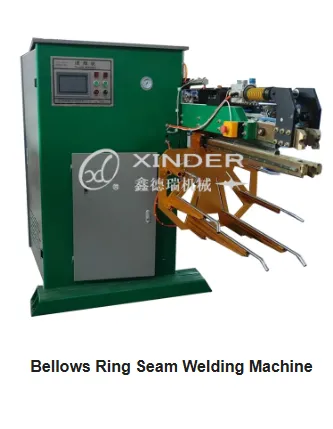
Understanding the Power of the Automated Resistance Welder
Resistance welding is one of the oldest and most reliable welding methods, and when combined with automation, it becomes a powerhouse for high-volume production. An automated resistance welder uses electrical resistance and pressure to create welds by heating the metal contact surfaces, joining materials quickly and effectively.
The key benefits of an automated resistance welder include:
High speed and repeatability: Perfect for mass production.
Minimal operator intervention: Reduces human error.
Consistent weld quality: Maintains uniformity even at high volumes.
Energy efficiency: Uses less power compared to other welding types.
Clean process: No filler materials or shielding gases needed.
These characteristics make automated resistance welding equipment indispensable in industries such as automotive manufacturing, electronics, appliances, and aerospace, where durability and precision are critical.
The Versatility of Automated Resistance Welding Equipment
Automated resistance welding equipment comes in various configurations tailored to specific industrial needs. Two common types are spot welding machines and seam welding machines, each optimized for particular applications.
- The Auto Spot Welding Machine
The auto spot welding machine is a specialized form of resistance welding equipment designed to join metal sheets at discrete points. It uses two electrodes to clamp the workpieces and deliver a high electric current pulse, generating heat through resistance and forming a strong weld.
Advantages of the auto spot welding machine:
Ideal for thin metals and sheet assemblies.
High-speed operation with programmable cycles.
Precise control of weld size and location.
Often integrated into robotic cells for fully automated production.
This machine is extensively used in automotive body assembly, battery manufacturing, and electronics, where spot welds are critical for structural integrity and electrical conductivity.
- Other Resistance Welding Variants
Besides spot welding, automated resistance welding equipment can also include seam welders, projection welders, and percussion welders, each serving unique industrial needs. Seam welders, for example, create continuous welds ideal for fuel tanks and cylindrical containers.
Expanding Capabilities with the Automatic Argon Welding Machine
While resistance welding is popular for many applications, certain materials and joints require a different approach. The automatic argon welding machine—typically referring to automated TIG (Tungsten Inert Gas) welding—utilizes argon gas as a shielding medium to protect the weld pool from contamination.
Features of the automatic argon welding machine include:
Use of inert argon gas to prevent oxidation.
Precise control over heat input, ideal for thin or reactive metals like stainless steel and aluminum.
Ability to weld complex shapes and joints automatically.
Reduced spatter and clean weld appearance.
This welding technology is preferred in industries requiring high-quality, corrosion-resistant welds such as aerospace, medical device manufacturing, and food processing equipment.
Automation Drives Welding Innovation
The integration of automation in welding technology—through devices like the automated resistance welder, auto spot welding machine, and automatic argon welding machine—is a game-changer for manufacturing industries. These systems combine speed, precision, and repeatability, enabling manufacturers to meet increasing demands for quality and output.
Choosing the right automated resistance welding equipment depends on the materials, production volume, and specific joint requirements. However, across all types, the benefits are clear: lower labor costs, improved safety, and superior weld quality.
As industries continue to innovate, automated welding machines will play an increasingly central role in shaping efficient, high-performance manufacturing lines.
-
Guide to Spartan Steel Bending Machine Price and Cost FactorsNewsApr.16,2026
-
Analyzing the Spartan Bending Machine Price and Buyer GuideNewsApr.09,2026
-
Understanding Small Bending Machine Price and Choosing the Right OptionNewsApr.07,2026
-
Comprehensive Guide to Sheet Metal Bending Machine Price and SelectionNewsApr.04,2026
-
Comprehensive Guide to Roofing Sheet Bending Machine Price and SelectionNewsMar.31,2026
-
Comprehensive Guide to Profile Bending Machine Price and SelectionNewsMar.28,2026
-
Comprehensive Guide to Press Bending Machine Price and Purchasing ConsiderationsNewsMar.26,2026
-
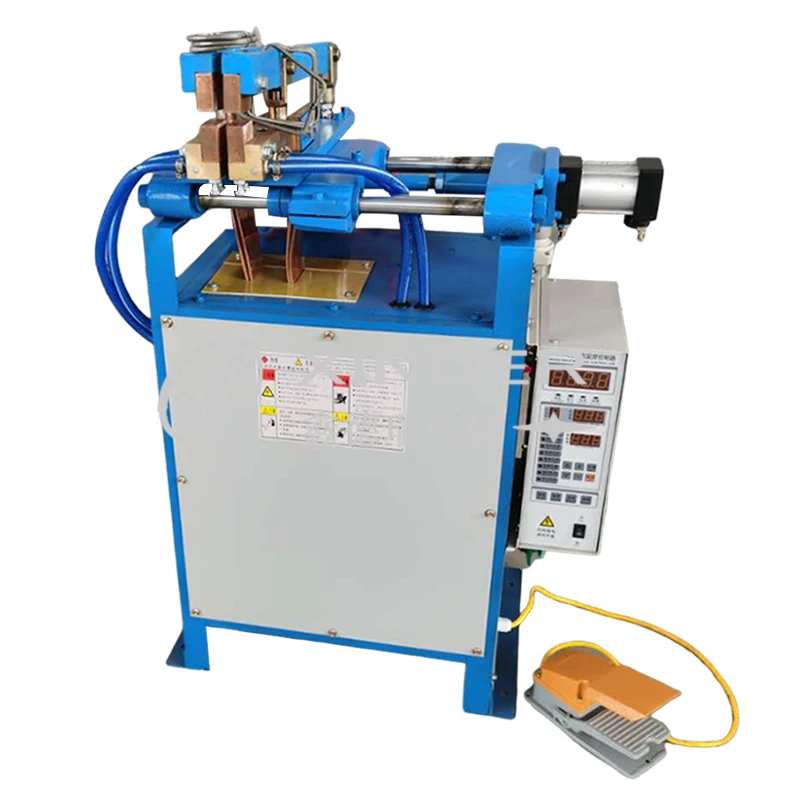 Pneumatic Handle Welding MachineSep . 13, 2024
 -
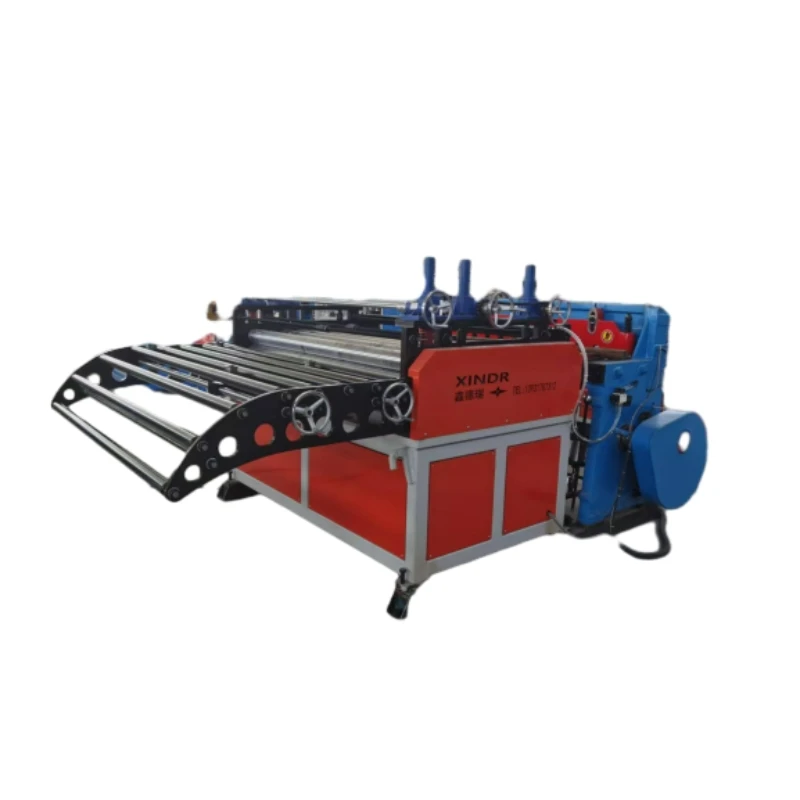 Fully Automatic Kaiping Production LineOct . 17, 2024
 -
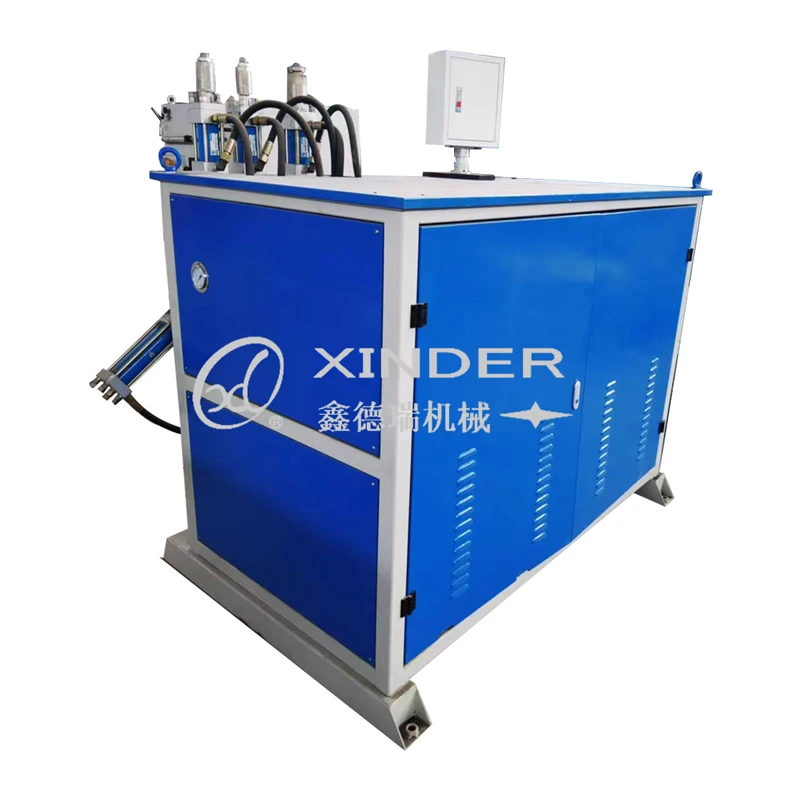 Fully Automatic Metal Bucket Lifting HeadphonesSep . 14, 2024