-
 8613931787312
 -
 Botou Industrial Zone on the east side of National Highway 104, Botou City, Hebei Province


The Physics Behind a Hydraulic Pipe Bender
Hydraulic pipe bender—including industrial-grade pipe bending machine and precision CNC wire bender models—relies on fundamental physics principles (hydraulic force, material elasticity, and torque distribution) to shape metal pipes and wires into consistent, accurate forms, critical for industries like construction, automotive, and aerospace. Unlike manual benders that rely on human strength (and risk uneven bends), these machines use controlled hydraulic pressure to apply force uniformly, ensuring pipes maintain structural integrity while meeting tight dimensional standards. For wholesalers serving metal fabrication shops, plumbing contractors, or automotive part manufacturers, partnering with a manufacturer that masters the physics of hydraulic bending is essential. Hebei Xindrui Machinery Manufacturing Co., Ltd., based in Cangzhou with 20+ years of experience (formerly Xindrui Machinery Factory), specializes in pipe bending machine (alongside metal packaging and non-standard equipment) and designs hydraulic pipe bender and CNC wire bender models that optimize these physical principles for bulk production.
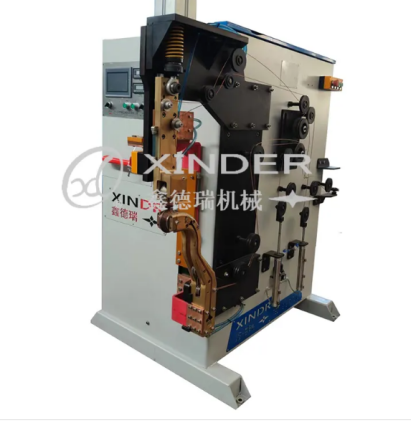
Hydraulic Force Transmission The Core Physics of Hydraulic Pipe Bender
- Pascal’s Law in Action for Pipe Bending Machine: Hydraulic pipe bender operates on Pascal’s Law (pressure applied to a confined fluid is transmitted equally in all directions)—the foundational physics that enables precise force control. Hebei Xindrui’s pipe bending machine uses a hydraulic system where a small piston (connected to a pump) applies pressure to hydraulic fluid, which then pushes a larger piston (connected to the bending arm). This force multiplication (e.g., a 10:1 piston ratio creates 10x more force at the bending arm) lets the machine bend thick-walled pipes (up to 20mm diameter) with minimal energy input. For example, a hydraulic pipe bender shaping steel pipes for a construction project uses Pascal’s Law to apply 5–10 tons of force evenly across the pipe’s surface, avoiding kinks or cracks. This efficient force transmission reduces machine wear (a key benefit for high-volume production) and ensures consistent bends—critical for wholesalers to highlight to clients with heavy-duty bending needs.
- Pressure Regulation for CNC Wire Bender: While CNC wire bender(for thin wires, 0.5–5mm diameter) uses smaller hydraulic systems than pipe benders, it still relies on pressure regulation to avoid wire deformation. Hebei Xindrui’s CNC wire bender models integrate pressure relief valves that adjust hydraulic force based on wire material (e.g., aluminum vs. stainless steel)—softer aluminum wires use lower pressure (0.5–1 MPa) to prevent flattening, while rigid stainless steel uses higher pressure (1–2 MPa) to ensure crisp bends. The physics here lies in balancing force with material strength: too little pressure causes incomplete bends, too much leads to wire breakage. A CNC wire bender making automotive electrical wires, for instance, uses precise pressure control to create 90° bends without damaging the wire’s insulation—thanks to this physics-driven regulation.
Material Elasticity and Plastic Deformation in Pipe Bending Machine
- Elastic Recovery Compensation for Hydraulic Pipe Bender: When a hydraulic pipe bender applies force to a pipe, the material first undergoes elastic deformation (temporary shape change) before transitioning to plastic deformation (permanent shape change)—a key physics principle that Hebei Xindrui’s machines account for. After bending, pipes “spring back” slightly (elastic recovery), so the pipe bending machine is programmed to over-bend by a small angle (e.g., 2–5° for steel pipes) to compensate. For example, a hydraulic pipe bender tasked with a 90° bend will actually bend the pipe to 93°, letting elastic recovery bring it to the exact 90° target. Hebei Xindrui’s R&D team tests different materials (steel, copper, aluminum) to map their elastic recovery rates, ensuring the pipe bending machine’s compensation settings are material-specific. This physics-based adjustment eliminates the need for post-bend rework—saving clients time and reducing material waste, a major value for wholesalers.
- Stress Distribution for CNC Wire Bender: CNC wire bender must manage stress distribution to avoid wire fatigue—another physics principle critical for precision. When bending wires, stress concentrates at the inner and outer radii of the bend: the outer radius stretches (tensile stress) while the inner radius compresses (compressive stress). Hebei Xindrui’s CNC wire bender uses a mandrel (a small rod inserted into the wire) to support the inner radius, distributing compressive stress evenly and preventing buckling. For a CNC wire bender shaping copper wires for electronic connectors, this mandrel ensures the inner bend radius stays consistent (no flattening) and the wire retains its electrical conductivity (stress cracks would disrupt current flow). This focus on stress physics ensures the CNC wire bender produces durable, high-performance parts—appealing to wholesalers serving electronics or automotive clients.
Hydraulic Pipe Bender Type & Physics Principle Application Comparison
|
Machine Type |
Key Physics Principle |
Ideal Material/Use Case |
Hebei Xindrui Advantage |
Wholesaler Value |
|
Hydraulic Pipe Bender |
Pascal’s Law; elastic recovery |
Thick steel/copper pipes (construction) |
Material-specific over-bend programming |
Caters to heavy-duty fabrication clients |
|
Pipe Bending Machine |
Force multiplication; stress distribution |
Medium-walled pipes (plumbing) |
Adjustable hydraulic pressure valves |
Appeals to plumbing/HVAC contractors |
|
CNC Wire Bender |
Pressure regulation; stress relief |
Thin wires (electronics, automotive) |
Mandrel-supported inner bends |
Fits precision component manufacturers |
Torque and Dimensional Accuracy Physics for Pipe Bending Machine
- Torque Distribution for Hydraulic Pipe Bender: Hydraulic pipe bender uses torque (rotational force) to bend pipes around a die—and the physics of torque distribution ensures the bend is uniform along the pipe’s length. Hebei Xindrui’s pipe bending machine designs the bending die and clamping mechanism to apply torque evenly: the die’s radius matches the desired bend radius, and the clamp holds the pipe firmly to prevent slippage (which would cause uneven torque and distorted bends). For example, a hydraulic pipe bender shaping pipes for an aircraft’s fuel system uses a die with a 50mm radius and a high-tension clamp to distribute torque evenly, ensuring every pipe has the exact same bend angle (±0.5° tolerance). This torque precision meets aerospace standards— a key selling point for wholesalers targeting high-regulation industries.
- CNC Control for Precision Physics in CNC Wire Bender: CNC wire bender takes physics-driven accuracy a step further with computerized control—CNC software calculates the exact force, torque, and bend angle needed for each wire, based on material properties. Hebei Xindrui’s CNC wire bender uses sensors to monitor real-time bending data (e.g., force applied, wire position) and adjusts parameters instantly to correct deviations (e.g., if the wire springs back more than expected, the machine increases the over-bend angle). A CNC wire bender producing medical device wires, for instance, uses CNC logic to apply the physics of elastic recovery dynamically, ensuring each wire meets the 0.1mm dimensional tolerance required for medical use. For wholesalers, this CNC-integrated physics ensures consistent output across bulk orders—critical for clients with strict quality standards.
Hydraulic Pipe Bender FAQS
Can Hydraulic Pipe Bender Be Customized for Unusual Pipe Sizes?
Yes—Hebei Xindrui customizes hydraulic pipe bender dies and hydraulic systems based on pipe size (0.5–200mm diameter) and material, leveraging the physics of force and torque for each unique application. For example, a wholesaler’s client needing to bend 150mm diameter steel pipes for industrial chimneys would get a pipe bending machine with a larger hydraulic piston (for more force) and a custom die (matching the chimney’s bend radius). The company’s R&D team recalculates Pascal’s Law ratios and elastic recovery rates for each customization, ensuring the machine performs reliably—no guesswork for wholesalers or their clients.
How Does CNC Wire Bender Handle Different Wire Materials?
Hebei Xindrui’s CNC wire bender uses pre-programmed material profiles that map to key physics properties (elasticity, tensile strength, and stress tolerance). For aluminum wires (low elasticity), the machine uses lower pressure and minimal over-bend; for stainless steel (high elasticity), it increases pressure and adds 3–5° over-bend. The CNC wire bender also adjusts mandrel size—thicker wires use larger mandrels to distribute stress—ensuring no material damage. For wholesalers, this material flexibility means one CNC wire bender can serve multiple client needs (e.g., electronics and automotive), reducing the need for separate machines.
What Physics-Related Maintenance Is Needed for Hydraulic Pipe Bender?
To preserve physics-driven performance, hydraulic pipe bender requires regular maintenance of the hydraulic system (to maintain Pascal’s Law efficiency): changing hydraulic fluid (to prevent pressure loss from contamination), inspecting piston seals (to avoid leaks that reduce force), and calibrating pressure gauges (to ensure accurate force readings). Hebei Xindrui provides wholesalers with a maintenance checklist that ties directly to physics principles—e.g., “replace fluid every 500 hours to maintain 95% force transmission.” This ensures the machine continues to apply force evenly and compensate for elastic recovery, avoiding defective bends.
Does Pipe Bending Machine’s Physics Performance Vary by Temperature?
Temperature affects hydraulic fluid viscosity (a key physics factor)—cold temperatures thicken fluid (reducing pressure transmission) while hot temperatures thin it (increasing leak risk). Hebei Xindrui’s pipe bending machine includes temperature control systems: heaters for cold environments (to keep fluid at 20–30°C) and coolers for hot climates (to prevent overheating). The machine also uses temperature-stable hydraulic fluid that maintains viscosity across 0–50°C, ensuring Pascal’s Law works consistently. For wholesalers serving clients in extreme climates, this temperature adaptation eliminates physics-related performance issues, making the pipe bending machine reliable year-round.
Can Hydraulic Pipe Bender Achieve the Same Precision as CNC Wire Bender?
While hydraulic pipe bender (for thick pipes) and CNC wire bender (for thin wires) target different applications, both use physics to deliver precision: hydraulic pipe bender focuses on force/torque control (±1° bend tolerance for pipes), while CNC wire bender adds real-time sensor feedback (±0.1° tolerance for wires). Hebei Xindrui’s high-end hydraulic pipe bender models integrate CNC controls to match physics-driven precision—e.g., a CNC-enabled hydraulic pipe bender for aerospace pipes achieves ±0.5° tolerance, close to a CNC wire bender’s accuracy.
-
Analyzing the Spartan Bending Machine Price and Buyer GuideNewsApr.09,2026
-
Understanding Small Bending Machine Price and Choosing the Right OptionNewsApr.07,2026
-
Comprehensive Guide to Sheet Metal Bending Machine Price and SelectionNewsApr.04,2026
-
Comprehensive Guide to Roofing Sheet Bending Machine Price and SelectionNewsMar.31,2026
-
Comprehensive Guide to Profile Bending Machine Price and SelectionNewsMar.28,2026
-
Comprehensive Guide to Press Bending Machine Price and Purchasing ConsiderationsNewsMar.26,2026
-
Comprehensive Guide to Plate Bending Machine Price and Optimal SelectionNewsMar.24,2026
-
 Pneumatic Handle Welding MachineSep . 13, 2024
 -
 Fully Automatic Kaiping Production LineOct . 17, 2024
 -
 Fully Automatic Metal Bucket Lifting HeadphonesSep . 14, 2024