-
 8613931787312
 -
 Botou Industrial Zone on the east side of National Highway 104, Botou City, Hebei Province


Energy Efficiency Comparison Between New and Old Models of Expansion Machine
In the competitive landscape of industrial manufacturing, energy efficiency has become a paramount concern, directly impacting operational costs, environmental sustainability, and overall productivity. For companies specializing in metal forming and container production, the evolution of expansion machinery represents a significant leap forward. Hebei Xindrui Machinery Manufacturing Co., Ltd., with its rich heritage dating back to the Xindrui Machinery Factory established in 2000, stands at the forefront of this innovation. Nestled in Cangzhou City, Hebei Province, the company benefits from a superior geographical location, with the Beijing-Shanghai Railway, Expressway, and National Highways 105 and 106 providing excellent logistical support. Over more than two decades, Hebei Xindrui has cultivated a proficient team dedicated to the research, development, and manufacturing of non-standard equipment for the metal products and packaging industries. Their expertise spans a wide range of applications, including the production of metal barrels, canning equipment, and specialized machinery for items like car mufflers, fuel tanks, and solar water heaters. This article delves into the energy efficiency advancements between older and newer models of expansion machines, drawing upon the company's extensive experience and specific product engineering.
Technological Evolution of the Hydraulic Expansion Machine
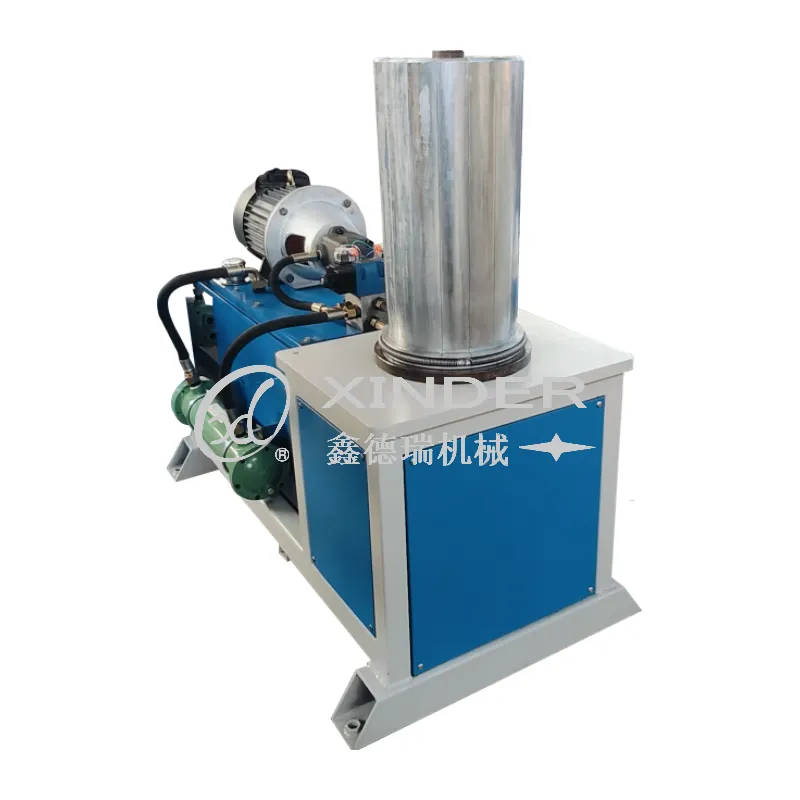
The transition from older mechanical systems to modern Hydraulic Expansion Machine units marks a significant milestone in industrial equipment design. Early models relied heavily on less efficient power transmission systems, leading to higher energy consumption for the same output.
Newer models, such as the Hebei Xindrui SL-20 Hydraulic Forming Machine, incorporate advanced hydraulic circuits and precision controls. These systems minimize energy loss through heat and friction, ensuring that a greater percentage of the input power is directly converted into the forming force required for expansion.
The use of robust materials, specifically the welding of high-grade profiles and steel plates, enhances the durability and structural integrity of the machine. This reduces the energy wasted on machine component flex and vibration during the expansion process of circular, square, or elliptical cylinders.
Features like automatic and CNC types allow for optimized operation cycles. The machine performs expansions and shaping sequences with minimal idle time, preventing unnecessary energy drain commonly associated with manually operated older models.
Energy Performance: Old Generation vs. New Generation Expansion Machines
Older expansion machine models often operated at a constant speed and power level, regardless of the specific demands of the task. This "always-on" approach resulted in substantial energy wastage, especially during low-intensity phases of the production cycle.
In contrast, new-generation expansion machine units are engineered with smart energy management systems. The SL-20 model, for instance, can adjust its hydraulic pressure and flow dynamically based on the real-time requirements of the material being processed, such as a 200L chemical barrel or a car filter housing.
The net weight of these machines, ranging from 0.5 to 2 tons, is a testament to their optimized design. While robust, modern engineering ensures that this mass contributes to stability and efficiency rather than being dead weight that requires excess energy to mobilize during operation.
The shift from generic, one-size-fits-all machines to those supporting non-standard customization means that each unit can be tailored for maximum efficiency for a specific task, such as cylinder expansion and shaping, thereby eliminating energy losses from using an overpowered or under-suited machine.
Enhancing Productivity with Advanced Mechanical Expander Systems
While hydraulic systems dominate modern discourse, the principles of the mechanical expander have been refined and integrated into contemporary designs. The core function of achieving plastic deformation to increase cylinder strength remains, but the path to get there is now far more efficient.
Newer models leverage the precision of CNC technology to guide the mechanical expander components with unparalleled accuracy. This reduces trial-and-error and rework, which were common energy-intensive drawbacks of older, less precise systems.
The integration of these systems into automated production lines, a specialty of Hebei Xindrui, ensures a seamless flow. A perfectly shaped barrel from the expansion machine moves directly to the next station without delay, optimizing the entire line's energy footprint per unit produced.
The ability to place the machine horizontally on the ground without complex installations further reduces the indirect energy costs associated with setup and maintenance, a notable improvement over older, more cumbersome models.
FAQs About Our Expansion Machine Solutions
How does the modern Hydraulic Expansion Machine achieve better energy efficiency compared to older models?
Modern Hydraulic Expansion Machine models utilize high-efficiency pumps, variable-speed drives, and optimized hydraulic fluid pathways. This design significantly reduces internal friction and heat generation, ensuring more input energy is used for the actual expansion and shaping process rather than being lost as waste heat, a common issue in older, less refined systems.
What specific features of the new expansion machine contribute to lower operational costs?
Key features include automated control systems that eliminate unnecessary run-time, robust construction from profiles and steel plates that minimizes energy loss to vibration, and the capability for non-standard customization. This ensures the expansion machine is perfectly matched to its task, such as forming specific container shapes, preventing over-consumption of power.
In what scenarios is a mechanical expander still a viable option, and how has its efficiency been improved?
A mechanical expander is highly effective for applications requiring extreme rigidity and specific, repetitive motions. Its efficiency has been enhanced through the use of superior materials and integration with CNC systems, which provide precise control over the expansion force and cycle, reducing energy waste from imprecise operations and material over-processing.
Can the SL-20 Hydraulic Expansion Machine be customized for different energy supply configurations?
Yes, as part of Hebei Xindrui's commitment to providing tailored solutions, the SL-20 supports extensive processing customization. This includes adaptability to various regional power standards and the potential to integrate with plant-wide energy management systems, ensuring the Hydraulic Expansion Machine operates optimally within any specific industrial environment.
What is the primary energy-saving advantage when using expansion machine for cylinder shaping?
The primary advantage lies in the single-cycle efficiency. Our expansion machine is engineered to achieve the required plastic deformation and increase in cylinder strength in one highly controlled operation. This contrasts with older models that might require multiple passes or adjustments, each consuming additional energy and time.
In summary, the journey from older to newer models of expansion machinery is characterized by a dedicated pursuit of energy efficiency. Hebei Xindrui Machinery Manufacturing Co., Ltd. embodies this progress, leveraging over 20 years of experience to design and manufacture equipment that not only meets diverse production needs—from military barrels to solar water heaters—but does so with a significantly reduced energy footprint. The integration of advanced hydraulic systems, precise mechanical components, and customizable features ensures that modern expansion machine units are not just tools for production but partners in achieving sustainable and cost-effective manufacturing operations. The continuous innovation in this field promises even greater efficiencies, solidifying the role of specialized machinery in the future of industrial fabrication.
-
Guide to Spartan Steel Bending Machine Price and Cost FactorsNewsApr.16,2026
-
Analyzing the Spartan Bending Machine Price and Buyer GuideNewsApr.09,2026
-
Understanding Small Bending Machine Price and Choosing the Right OptionNewsApr.07,2026
-
Comprehensive Guide to Sheet Metal Bending Machine Price and SelectionNewsApr.04,2026
-
Comprehensive Guide to Roofing Sheet Bending Machine Price and SelectionNewsMar.31,2026
-
Comprehensive Guide to Profile Bending Machine Price and SelectionNewsMar.28,2026
-
Comprehensive Guide to Press Bending Machine Price and Purchasing ConsiderationsNewsMar.26,2026
-
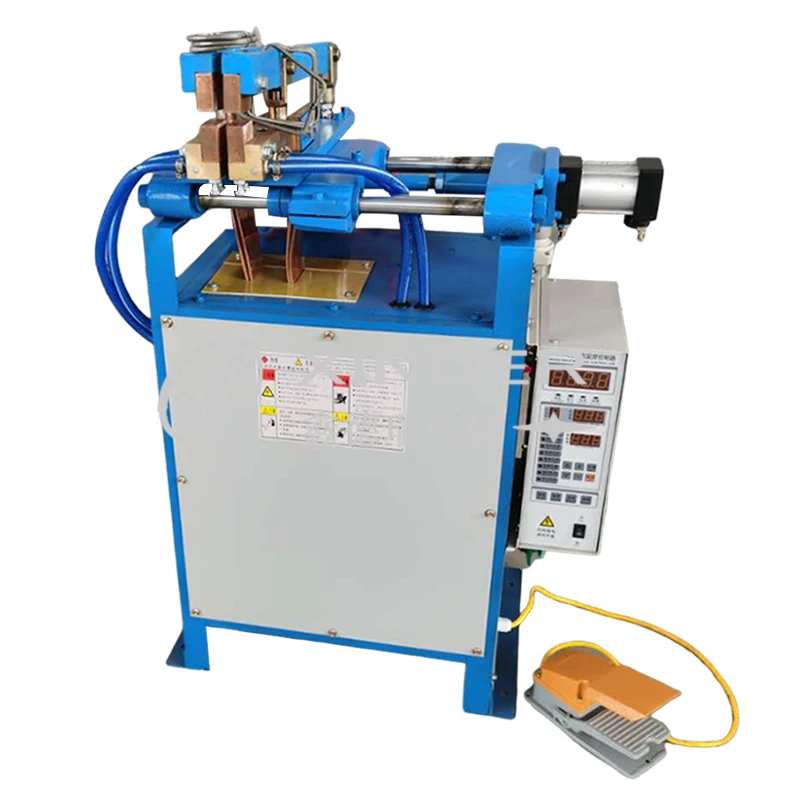 Pneumatic Handle Welding MachineSep . 13, 2024
 -
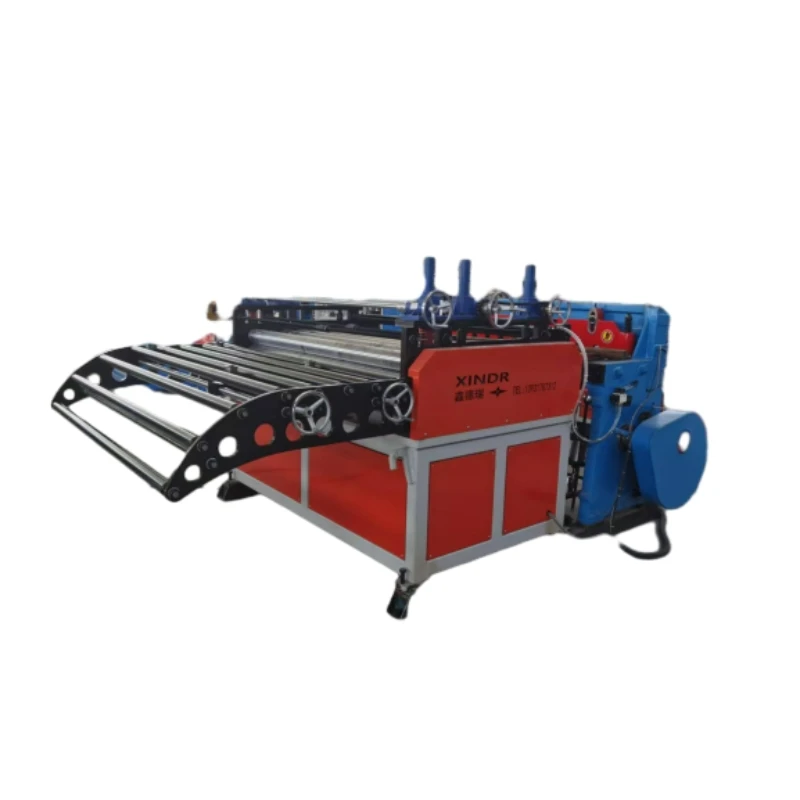 Fully Automatic Kaiping Production LineOct . 17, 2024
 -
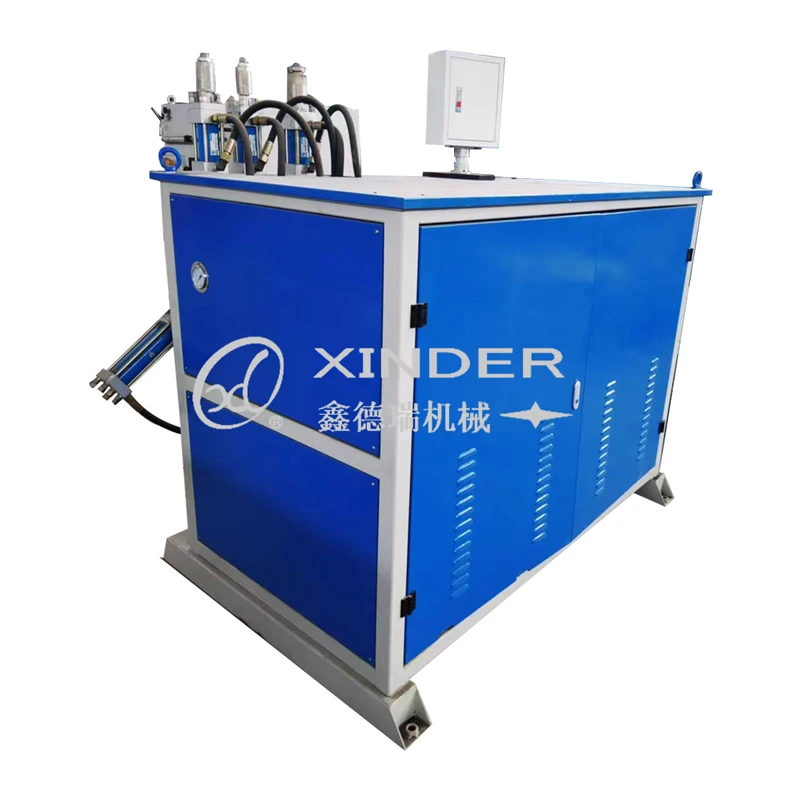 Fully Automatic Metal Bucket Lifting HeadphonesSep . 14, 2024