-
 8613931787312
 -
 Botou Industrial Zone on the east side of National Highway 104, Botou City, Hebei Province


Seam Welding Machines: Technology, Applications, and Working Principles
Seam welding is a widely used process in industries that require continuous, leak-proof, and strong welds. Whether in the automotive sector, manufacturing of cylindrical containers, or the production of tanks and fuel systems, seam welding machines offer precise and efficient solutions. From a basic weld seam machine to advanced resistance seam welding machines, these systems play a critical role in industrial automation and high-volume metal joining.
This article explores different types of seam welding machines, their industrial relevance, and the seam welding machine working principle, helping manufacturers and engineers make informed choices.
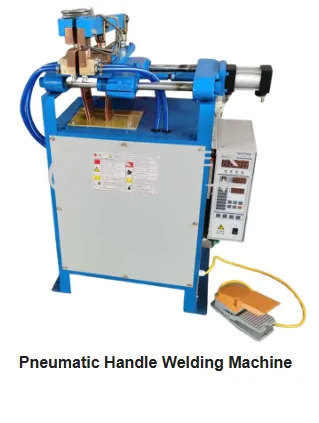
What Is a Weld Seam Machine and Where Is It Used?
A weld seam machine is a specialized welding system designed to join two overlapping metal sheets or components along a continuous seam. This method is different from spot welding, which applies welds at individual points. Instead, seam welding uses rotating wheels or electrodes to produce a consistent line of welds, either through heat or pressure.
Weld seam machines are commonly used in:
Automotive manufacturing (fuel tanks, mufflers, and exhaust systems)
Aerospace industry (aircraft skin panels)
Appliance production (refrigerators, washing machines)
Battery casings and cylindrical containers
By delivering airtight and watertight welds, seam welding ensures the structural integrity and safety of critical components.
There are two main types of weld seam machines:
Continuous seam welding machines: Provide an uninterrupted weld along the entire joint.
Intermittent seam welding machines: Deliver a series of overlapping spot welds that resemble a continuous weld.
Understanding the Role of a Welding Seam Machine in Industrial Automation
A welding seam machine is essentially a broader term encompassing various technologies that perform seam welding. These machines integrate mechanical movement, pressure, and electrical current (or laser heat) to generate a weld along a seam.
Key components of a welding seam machine typically include:
Electrode wheels: Made from copper alloys for conductivity and durability.
Control systems: Manage current, pressure, and speed.
Drive mechanism: Moves the workpiece or welding head along the seam.
Cooling system: Prevents overheating of electrodes and welded materials.
Advantages of welding seam machines include:
High-speed and high-volume production capabilities.
Consistent weld quality across long seams.
Minimal need for filler materials.
Reduced distortion in thin sheets.
In modern manufacturing lines, welding seam machines are often paired with robotic arms and CNC controls for precision, repeatability, and full automation.
What Is a Resistance Seam Welding Machine and How Does It Work?
Among all types of seam welding equipment, the resistance seam welding machine is the most widely used, especially in applications involving thin sheet metals. This machine utilizes both electrical resistance and pressure to create welds along the seam.
Key Features of a Resistance Seam Welding Machine:
Uses two rotating copper alloy wheels as electrodes.
Applies continuous or pulsed electric current as the wheels move along the joint.
Generates localized heat due to electrical resistance at the contact point of the metals.
Uses pressure to forge the heated materials into a solid-state weld.
Resistance seam welding machines are perfect for materials like steel, stainless steel, and nickel alloys. They produce smooth, strong, and leak-proof welds with a clean appearance.
Industries that benefit from this process include:
Automotive (fuel tanks, radiator tubes)
Electronics (battery packs, motor cores)
HVAC systems (sealed ducts and pipe joints)
Packaging (tin cans and food containers)
Their efficiency, cleanliness, and automation-friendly nature make resistance seam welding machines indispensable in modern production environments.
The Seam Welding Machine Working Principle Explained
To fully appreciate the capabilities of a seam welding system, it’s important to understand the seam welding machine working principle. At its core, the process is based on the controlled application of pressure and heat to the metal sheets being joined.
Here’s how the seam welding machine working principle operates step-by-step:
Setup and Positioning:
Two overlapping metal sheets are placed between rotating copper alloy wheels (electrodes).
The wheels are aligned precisely along the intended seam line.
Application of Pressure:
The machine applies pressure through the electrode wheels to hold the metal sheets together.
This ensures proper contact and conductivity.
Electrical Current Flow:
A high-amperage, low-voltage current passes through the electrodes and the metal sheets.
Due to the resistance at the contact surfaces, heat is generated.
Localized Melting:
The heat melts a narrow strip between the overlapping metals.
Pressure from the electrode wheels helps forge the melted material into a continuous weld.
Weld Formation:
As the wheels roll along the seam, the welding process continues, forming either a continuous or overlapping series of spot welds.
Cooling:
A water-cooling system keeps the electrode wheels and weld zone from overheating, maintaining weld quality and machine longevity.
The result is a strong, uniform weld that is suitable for critical structural or fluid-containing components. The seam welding machine working principle ensures minimal material deformation and a high degree of automation compatibility.
From tanks and fuel lines to food containers and HVAC components, seam welding machines play a vital role in manufacturing robust, sealed, and visually clean metal joints. Whether you're using a general weld seam machine, a versatile welding seam machine, or a high-precision resistance seam welding machine, understanding the seam welding machine working principle is key to selecting and using the right equipment effectively.
As industries evolve and demand greater productivity, quality, and automation, seam welding will continue to be a cornerstone technology—delivering high-speed, high-strength, and high-integrity welds across a wide range of applications. By investing in the right machine and understanding its core functions, manufacturers can ensure long-term success in production performance and product reliability.
-
Guide to Spartan Steel Bending Machine Price and Cost FactorsNewsApr.16,2026
-
Analyzing the Spartan Bending Machine Price and Buyer GuideNewsApr.09,2026
-
Understanding Small Bending Machine Price and Choosing the Right OptionNewsApr.07,2026
-
Comprehensive Guide to Sheet Metal Bending Machine Price and SelectionNewsApr.04,2026
-
Comprehensive Guide to Roofing Sheet Bending Machine Price and SelectionNewsMar.31,2026
-
Comprehensive Guide to Profile Bending Machine Price and SelectionNewsMar.28,2026
-
Comprehensive Guide to Press Bending Machine Price and Purchasing ConsiderationsNewsMar.26,2026
-
 Pneumatic Handle Welding MachineSep . 13, 2024
 -
 Fully Automatic Kaiping Production LineOct . 17, 2024
 -
 Fully Automatic Metal Bucket Lifting HeadphonesSep . 14, 2024