-
 8613931787312
 -
 Botou Industrial Zone on the east side of National Highway 104, Botou City, Hebei Province


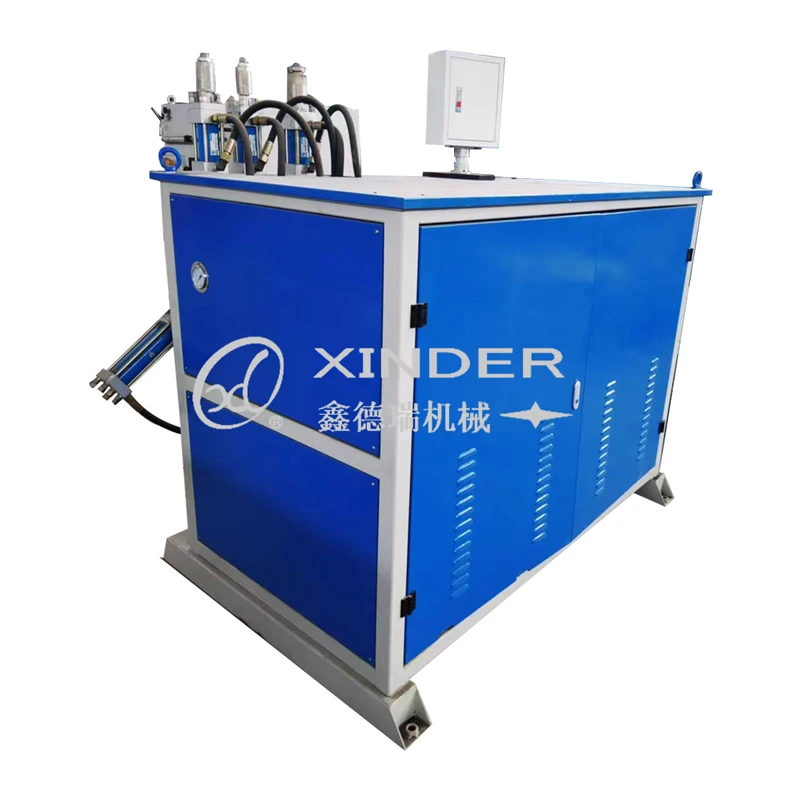
Pneumatic Spot Welder | Fast, Durable, Precision Welding
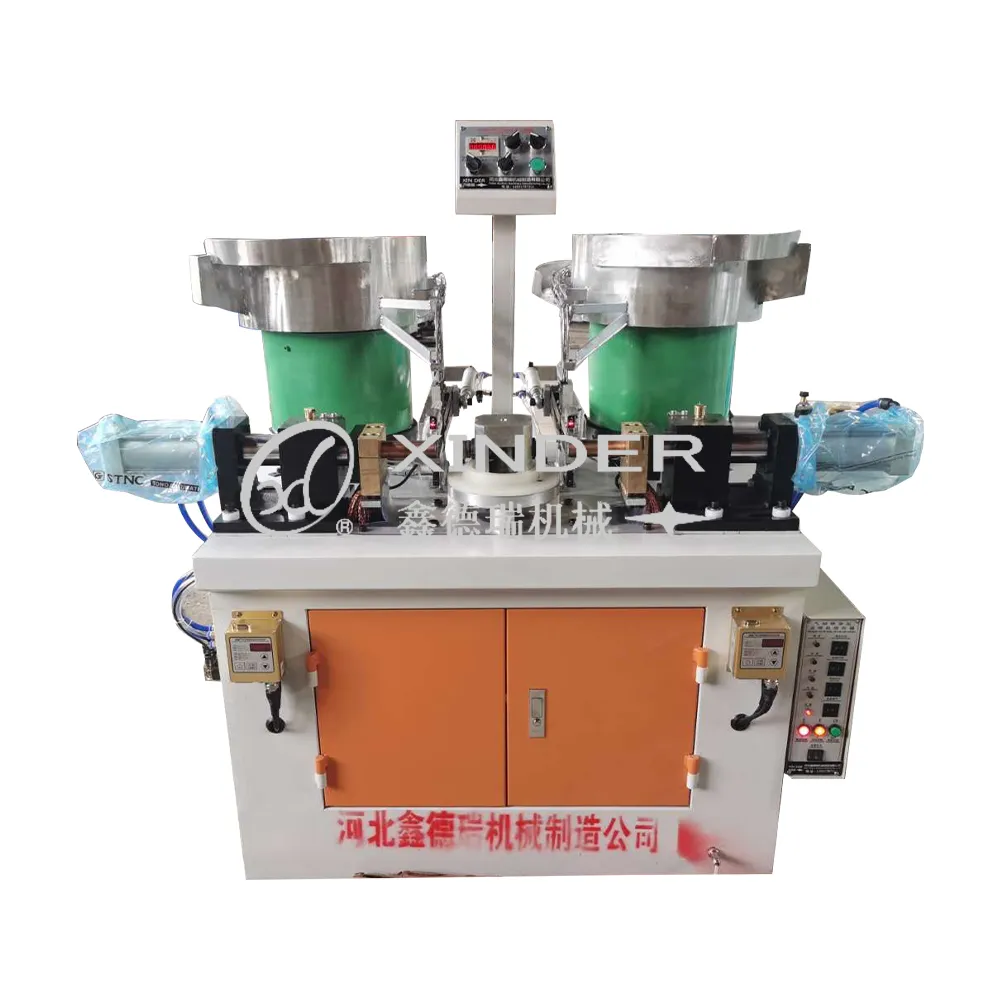
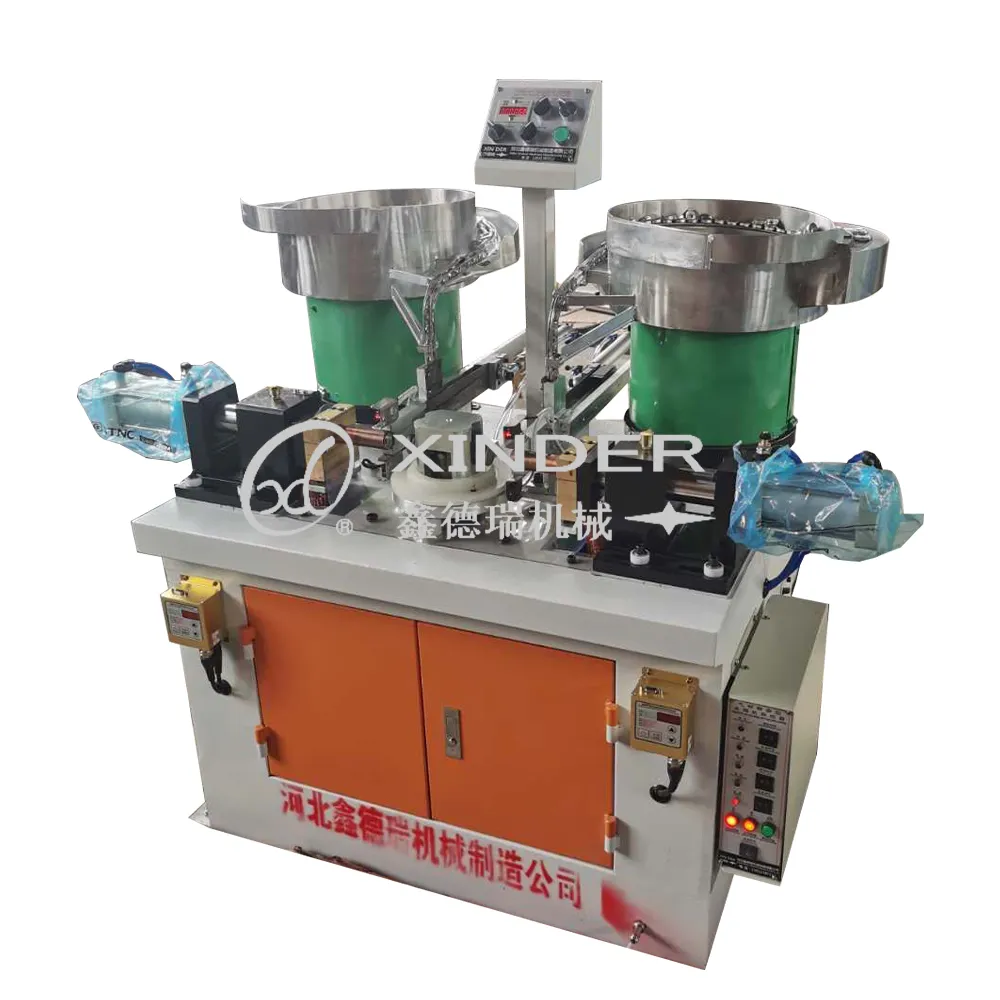
Inside the can-making line: a practical look at pneumatic double-ear spot welding
If you work around food or chemical can lines, you’ve probably heard a tech mention a pneumatic spot welder that does both lifting ears at once. This model—formally the Fully automatic pneumatic double ear spot welding machine—comes out of the Botou Industrial Zone on the east side of National Highway 104, Botou City, Hebei Province. I visited a plant there some time ago; lots of practical minds, little drama, and gear that just… works.
What’s trending (and why this matters)
Short answer: uniformity, digital control, and paint-breaking. The current wave of equipment uses microcontroller logic to synchronize current and air actuation so both ears land with tight symmetry. This unit adds an automatic paint-breaking function, meaning printed can bodies don’t need blank windows—nice for brand teams and line planners. Also notable: imported pneumatics/electronics and high-performance alloy electrodes to stretch service life. Sustainability folks will like the low scrap and repeatable nugget size.
Quick spec snapshot
| Model | Fully automatic pneumatic double ear spot welding machine |
| Weld type | Resistance spot weld, dual-ear simultaneous |
| Materials | Tinplate/steel can bodies, ear tabs (low-carbon steel) |
| Sheet thickness | ≈0.18–0.35 mm (real-world use may vary) |
| Current control | Digital microcontroller; multi-stage current/time |
| Air pressure / force | 0.5–0.7 MPa; electrode force tuned per ear geometry |
| Nugget diameter | ≈3.5–5.5 mm on 0.22 mm tinplate (shop trials) |
| Cycle time | 1–2 s/part, both ears simultaneously (typical) |
| Paint-breaking | Automatic; double-sided print welding supported |
| Electrodes | High-performance alloy; life ≈ 80k–150k welds before dressing |
| Certs | ISO 9001 factory QA; CE on electrical safety (typical) |
Where it fits on the line
- Food cans, paint tins, and specialty chemical container111s.
- New ear designs or retrofits where symmetry tolerance is tight.
- Printed can bodies—no blank needed thanks to stable paint-breaking.
Process flow and quality checks
Materials: tinplate can body + steel lifting ears. Method: resistance spot welding per ISO 14373. Typical setup includes tip dressing, current ramp, squeeze time, weld time, and hold time. Testing: peel/chisel per ISO 10447; shear checks and visual nugget confirmation. Many customers say they target peel strength ≥ 180–220 N per ear on 0.22 mm stock, with nugget consistency checked every 30–60 minutes. Service life: electrodes dressed periodically; major components commonly run multiple years with routine pneumatics upkeep.
Why this pneumatic spot welder stands out
- Dual-ear symmetry—better handle alignment, fewer rejects.
- Digital current control—more uniform, especially on coated stock.
- Imported pneumatics/electronics—smoother motion, stable timing.
- Alloy electrodes—longer life; fewer line stoppages.
Vendor comparison (real-world impressions)
| Vendor | Controller | Duty cycle | Support |
|---|---|---|---|
| XDR (Botou) | Digital MCU, multi-stage | High for thin-gauge tinplate | Direct, spare parts on-hand |
| Generic import | Analog or basic PLC | Moderate; more rework on coated stock | Variable; response times vary |
| OEM retrofit | Depends on legacy line | Good but integration-heavy | Through system integrator |
Customization options
To be honest, ear geometry drives half the decisions. Common tweaks include custom jigs and anvils, electrode profiles for specific coatings, vision checks for ear placement, and PLC handshakes with conveyors. Some plants add barcode ties for traceability; others keep it simple and fast. This pneumatic spot welder plays nicely with both.
Mini case study
A mid-size canner in East Asia switched from single-ear welders to this dual-ear setup. After two weeks of tuning, symmetry defects dropped by ≈40%, and changeover time fell by ~20% thanks to the paint-breaking feature. Operators said the new digital timing made the “sweet spot” easier to keep during humid shifts—small thing, big impact.
Standards and references
- ISO 14373: Resistance welding — Procedure for spot, seam and projection welds on steel.
- ISO 10447: Resistance welding — Peel and chisel testing of spot, seam and projection welds.
- IEC 60204-1: Safety of machinery — Electrical equipment of machines.
- AWS C1.1M/C1.1: Recommended Practices for Resistance Welding.
-
Guide to Spartan Steel Bending Machine Price and Cost FactorsNewsApr.16,2026
-
Analyzing the Spartan Bending Machine Price and Buyer GuideNewsApr.09,2026
-
Understanding Small Bending Machine Price and Choosing the Right OptionNewsApr.07,2026
-
Comprehensive Guide to Sheet Metal Bending Machine Price and SelectionNewsApr.04,2026
-
Comprehensive Guide to Roofing Sheet Bending Machine Price and SelectionNewsMar.31,2026
-
Comprehensive Guide to Profile Bending Machine Price and SelectionNewsMar.28,2026
-
Comprehensive Guide to Press Bending Machine Price and Purchasing ConsiderationsNewsMar.26,2026
-
 Pneumatic Handle Welding MachineSep . 13, 2024
 -
 Fully Automatic Kaiping Production LineOct . 17, 2024
 -
 Fully Automatic Metal Bucket Lifting HeadphonesSep . 14, 2024