-
 8613931787312
 -
 Botou Industrial Zone on the east side of National Highway 104, Botou City, Hebei Province


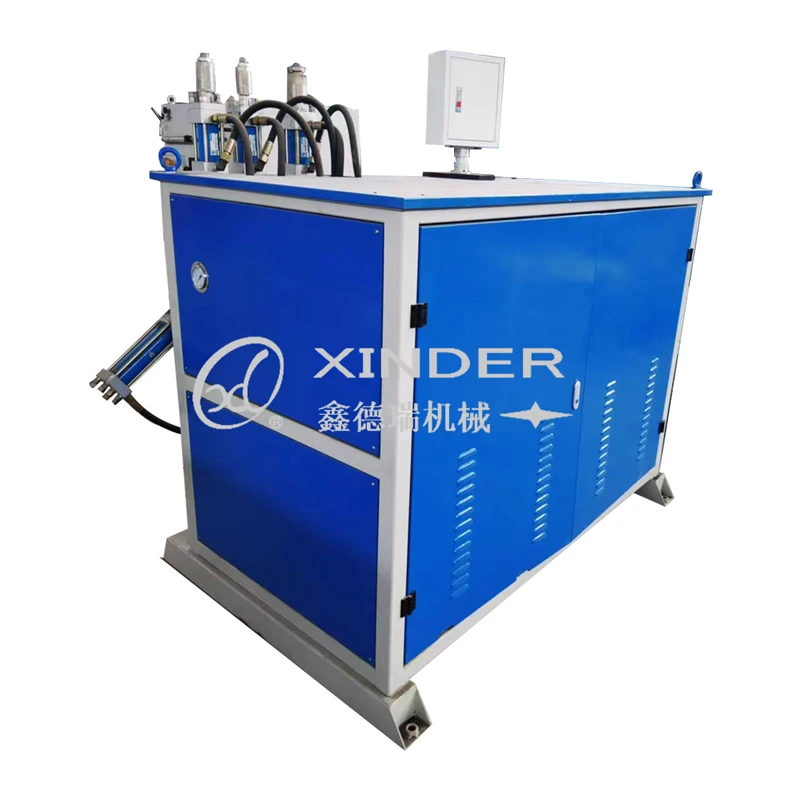
Multi Head Point (Convex) Welding Machine - Fast, Precise
Multi-head Projection Power, Real-World Throughput
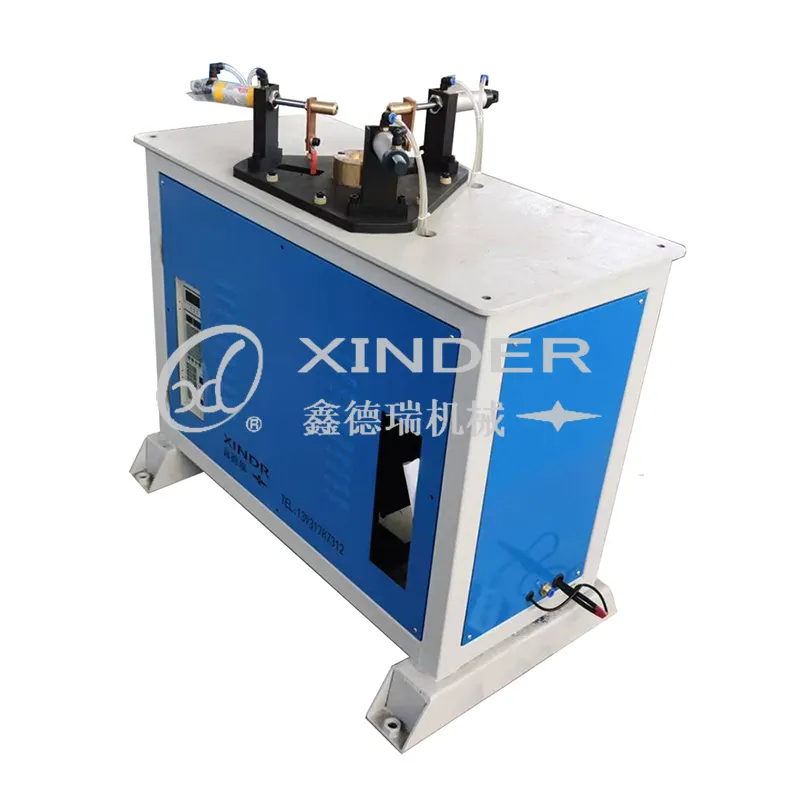
I spent a few days in Botou Industrial Zone—on the east side of National Highway 104, Botou City, Hebei Province—watching a Multi Head Point (Convex) Welding Machine hum through a stack of galvanized brackets. The line foreman just grinned: “no drama, just parts.” That’s the whole point. Multi-head projection (convex) welding isn’t flashy; it’s about stable current, accurate force, and repeatable nuggets at speed.
What’s happening in the market (briefly)
EV busbars, appliance brackets, HVAC louvers—multi-point projection welding is everywhere right now. Plants want shorter takt times without raising scrap. Honestly, that’s why multi-head rigs are getting attention: parallel welds on one squeeze, less heat spread, fewer fixtures. Many customers say they’re replacing two spot welders with one Multi Head Point (Convex) Welding Machine and getting better flatness.
Typical specs (real-world, not brochure-perfect)
| Weld heads | 4–12 (custom up to 24), independently controlled |
| Power & control | MFDC inverter 100–300 kVA/head (≈), constant-current with waveform logging |
| Electrodes | RWMA Class 2/3, water-cooled manifolds; quick-change caps |
| Material range | CRS, galvanized (GI/GA), HSLA ≤2.5 mm per sheet; stainless ≤2.0 mm; weld-nut projections per ISO 13918 |
| Cycle time | ≈0.35–0.6 s/weld cycle for 8 heads (depends on stack-up and coatings) |
| Certs & build | ISO 9001 factory; design aligned to ISO 14373, ISO 4063 (Process 21) |
How it runs: process flow
Materials: stamped parts with formed projections or weld nuts; surface lightly oiled, no scale. Methods: clamped fixture → squeeze (3–6 kN/head ≈) → MFDC pulse (6–12 kA/head ≈) → hold for solidification → release. Testing: nugget size per ISO 14373, peel test and torque-out for nuts; periodic electrode dressing. Service life: electrodes 10k–40k welds (varies by coating), head cylinders 5–8 years, inverter fans 3–5 years. Industries: appliances, auto brackets, elevators, racking, lighting, HVAC.
Field data (sample, one shift)
On 1.5+1.5 mm GA, eight-head array: 0.48 s cycle, 1.1% rework, average nugget ≈5.2 mm, no expulsion after current trim. To be honest, the surprise was lower panel distortion—parallel squeeze helped.
Why this format works
- Parallel welds = fewer fixtures and less heat spread.
- Constant-current MFDC stabilizes through dirty coatings.
- Head-by-head control helps when projections aren’t perfectly uniform (and they never are).
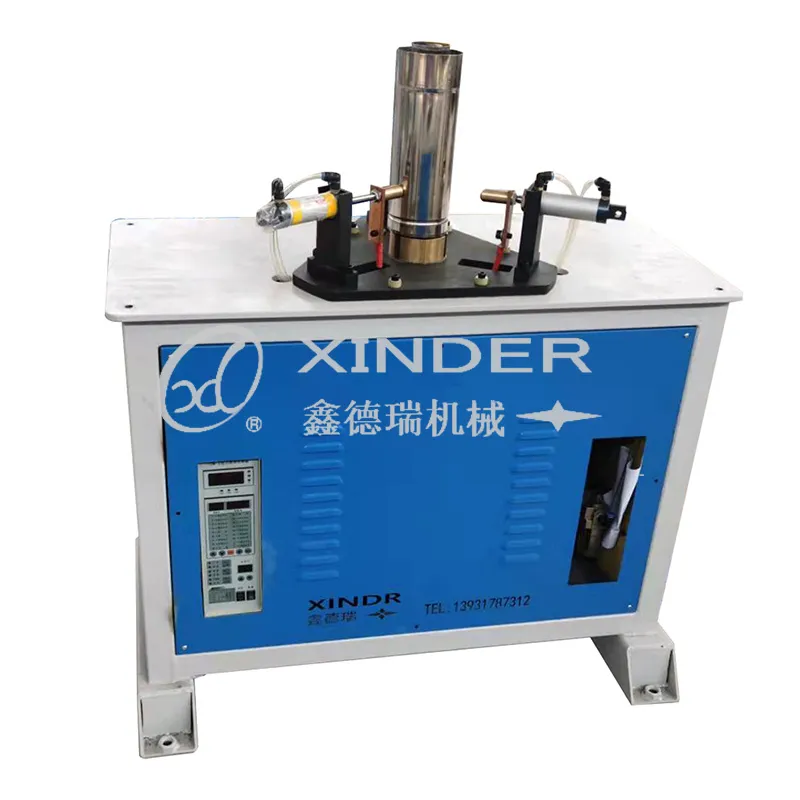
Vendor snapshot (approximate)
| Vendor | Power/Heads | Lead Time | Warranty | Notes |
|---|---|---|---|---|
| XDR Machinery (Botou) | 100–300 kVA/head; 4–24 heads | ≈6–9 weeks | 18 months | Strong fixturing; quick spares |
| Brand B (domestic) | 80–200 kVA; 4–12 heads | ≈8–12 weeks | 12 months | Basic HMI; fair pricing |
| Brand C (import) | 120–300 kVA; 6–16 heads | ≈10–16 weeks | 12 months | High-end controls; higher cost |
Customization and options
You can spec staggered head spacing, servo height adjustment, nut feeders, barcode job recall, and torque/peel test stations. I guess most shops start simple and add traceability later. For stainless, consider Class 3 electrodes and boosted water flow.
Case note: elevator brackets
One elevator OEM running a Multi Head Point (Convex) Welding Machine switched from two single-gun stations. Result: 28% takt reduction, 0.7% scrap to 0.3%, and flatter parts—customer feedback was basically “why didn’t we do this earlier?”
Standards and compliance
Designed around ISO 14373 for resistance spot/projection welding; process coding per ISO 4063. Weld nuts per ISO 13918, quality system ISO 9001. Automotive folks sometimes add AWS D8.1 audits; it’s supported.
References
-
Guide to Spartan Steel Bending Machine Price and Cost FactorsNewsApr.16,2026
-
Analyzing the Spartan Bending Machine Price and Buyer GuideNewsApr.09,2026
-
Understanding Small Bending Machine Price and Choosing the Right OptionNewsApr.07,2026
-
Comprehensive Guide to Sheet Metal Bending Machine Price and SelectionNewsApr.04,2026
-
Comprehensive Guide to Roofing Sheet Bending Machine Price and SelectionNewsMar.31,2026
-
Comprehensive Guide to Profile Bending Machine Price and SelectionNewsMar.28,2026
-
Comprehensive Guide to Press Bending Machine Price and Purchasing ConsiderationsNewsMar.26,2026
-
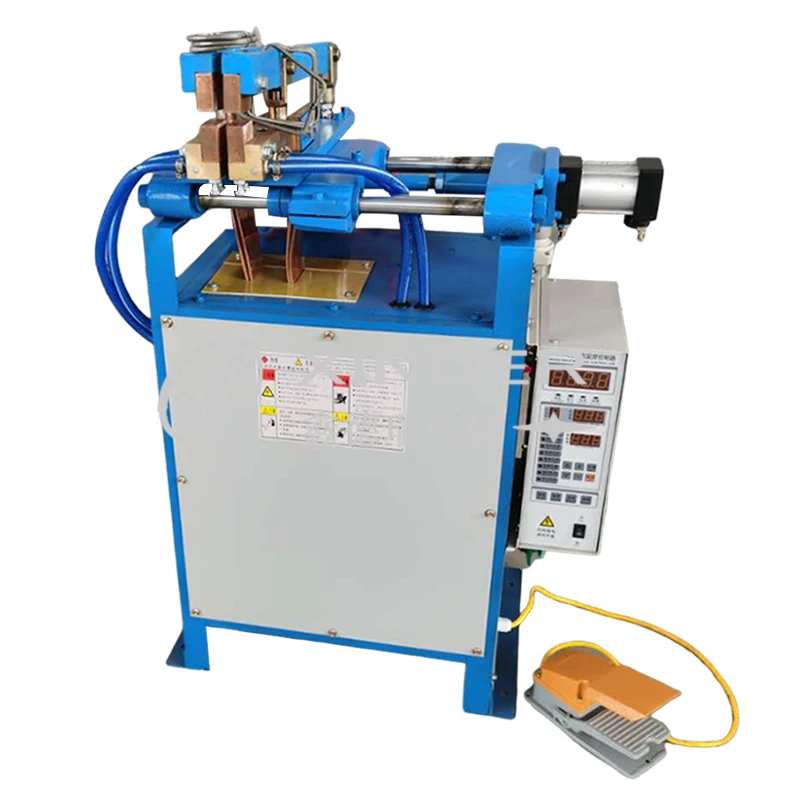 Pneumatic Handle Welding MachineSep . 13, 2024
 -
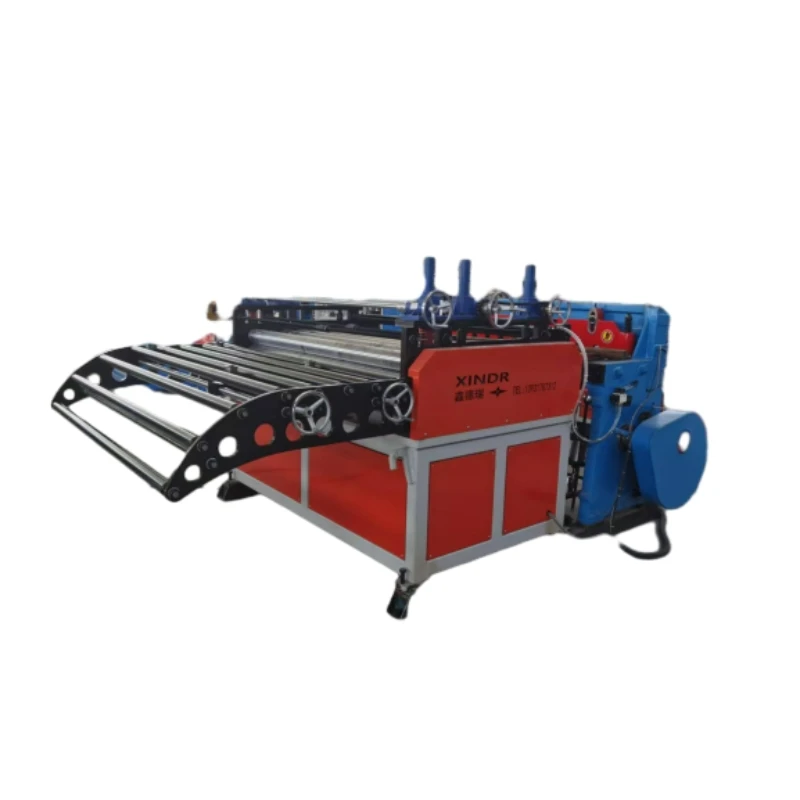 Fully Automatic Kaiping Production LineOct . 17, 2024
 -
 Fully Automatic Metal Bucket Lifting HeadphonesSep . 14, 2024