-
 8613931787312
 -
 Botou Industrial Zone on the east side of National Highway 104, Botou City, Hebei Province


Corrugated Metal Elbow Production Line | High-Speed CNC
Corrugated elbows, done right: a field look at a modern line
If you work with culverts, HVAC exhaust, or petrochemical piping, you’ve probably wrestled with elbow performance. That’s why the Corrugated Metal Elbow Production Line has been getting so much attention lately. Actually, I spent a morning in Botou Industrial Zone on the east side of National Highway 104 (Botou City, Hebei Province) where the factory lives, and—no surprise—operators kept telling me the same thing: consistency beats speed, but this system tries to deliver both.
What the line actually does (and why it matters)
The Corrugated Metal Elbow Production Line forms precise corrugations, bends to preset angles, welds the seam, and calibrates geometry—all inline. In practice, that means elbows with better flexibility under load, improved vibration damping, and surprisingly neat internal flow profiles (yes, corrugations can behave nicely if pitch/depth are tuned).
Process flow, materials, and controls
- Materials: SS304/316L, galvanized steel, and Q235 carbon steel (others on request).
- Flow: Decoiling → strip leveling → corrugation rolling → CNC elbow forming (15°–90°) → seam welding (TIG/MIG or laser) → optional in-line annealing → sizing/calibration → eddy-current check → hydrostatic/air-leak test → marking and packing.
- Testing: Hydro to ≈1.0–1.5 MPa (real-world use may vary), leak ≤ 0.5% of volume/hour; dimensional tolerance typically ±0.3 mm on ID, angle ±0.5° after calibration.
Control comes via a Siemens PLC + HMI, which, to be honest, is what many maintenance teams prefer. Angle recipes, corrugation pitch/depth, and feed speed are all adjustable on the panel.
Quick specifications
| Parameter | Typical Value (≈, real-world may vary) |
|---|---|
| Tube/Elbow Diameter Range | Ø80–800 mm |
| Elbow Angles | 15°, 30°, 45°, 60°, 90° (custom) |
| Corrugation Pitch / Depth | Pitch 6–25 mm; depth 2–10 mm |
| Forming Speed | 3–10 m/min (material/diameter dependent) |
| Welding | TIG/MIG; optional fiber laser 1–2 kW |
| Tolerance (ID / Angle) | ±0.3 mm / ±0.5° |
| Power | ≈35–60 kW total |
| Noise | ≤78 dB(A) |
| Service Life | Rolls ≈ 1–2 million cycles before regrind |
Where these elbows end up
- Municipal drainage and culvert redirections; water management retrofits.
- HVAC/exhaust bends for commercial kitchens and power-gen skids.
- Mining, tunneling, and temporary site drainage (fast deploy, rugged).
- Petrochemical vapor lines and flare systems (SS316L preferred).
Standards, certifications, and sample test data
Built to align with ISO 12100 and EN 60204-1 for machinery safety; plants frequently carry ISO 9001. Materials conform to ASTM A240 (stainless) or GB/T/Q grades for carbon steel; corrugated drainage references often benchmark ASTM A760. A recent batch of Ø400 mm, 45° elbows (galvanized) recorded leak rate 0.18% vol/hr at 1.2 MPa and angle deviation of 0.3°. Not bad, honestly.
Vendor landscape (a candid snapshot)
| Vendor | Lead Time | Customization | Certs | After‑sales |
|---|---|---|---|---|
| XDR (Botou) | ≈45–70 days | High: pitch/angle/laser options | ISO 9001, CE (decl.) | Remote + on-site commissioning |
| Vendor A (EU) | ≈90–120 days | Medium; strong documentation | CE, ISO 12100 | Premium service contracts |
| Vendor B (APAC) | ≈60–90 days | Medium‑High; competitive pricing | ISO 9001 | Hotline; spares stock varies |
Customization and real-world feedback
Options include laser welding, servo upgrades for micro-pitch corrugation, and wider tooling for Ø>800 mm. One HVAC fabricator told me, “We swapped to stainless tooling and kept ±0.3 mm after three months, which is… unexpected, in a good way.” Another municipal buyer liked the quick angle changeover—under 10 minutes once the crew got the hang of it.
Mini case files
- City drainage retrofit (MENA): 600 mm, 45° galvanized elbows; 5 m/min average; hydro @1.2 MPa; zero rejects in FAT.
- Petrochem skid (SEA): 316L, 30° elbows with shallow corrugation for lower turbulence; laser seam; weld bead hardness reduced ≈18% post‑anneal.
Sources and standards:
- ISO 12100: Safety of machinery—General principles for design.
- EN 60204-1: Safety of machinery—Electrical equipment of machines.
- ISO 9001:2015—Quality management systems.
- ASTM A240—Standard Specification for Chromium and Chromium-Nickel Stainless Steel Plate, Sheet, and Strip.
- ASTM A760—Standard Specification for Corrugated Steel Pipe, Metallic-Coated.
- Directive 2006/42/EC—Machinery Directive (CE).
-
Guide to Spartan Steel Bending Machine Price and Cost FactorsNewsApr.16,2026
-
Analyzing the Spartan Bending Machine Price and Buyer GuideNewsApr.09,2026
-
Understanding Small Bending Machine Price and Choosing the Right OptionNewsApr.07,2026
-
Comprehensive Guide to Sheet Metal Bending Machine Price and SelectionNewsApr.04,2026
-
Comprehensive Guide to Roofing Sheet Bending Machine Price and SelectionNewsMar.31,2026
-
Comprehensive Guide to Profile Bending Machine Price and SelectionNewsMar.28,2026
-
Comprehensive Guide to Press Bending Machine Price and Purchasing ConsiderationsNewsMar.26,2026
-
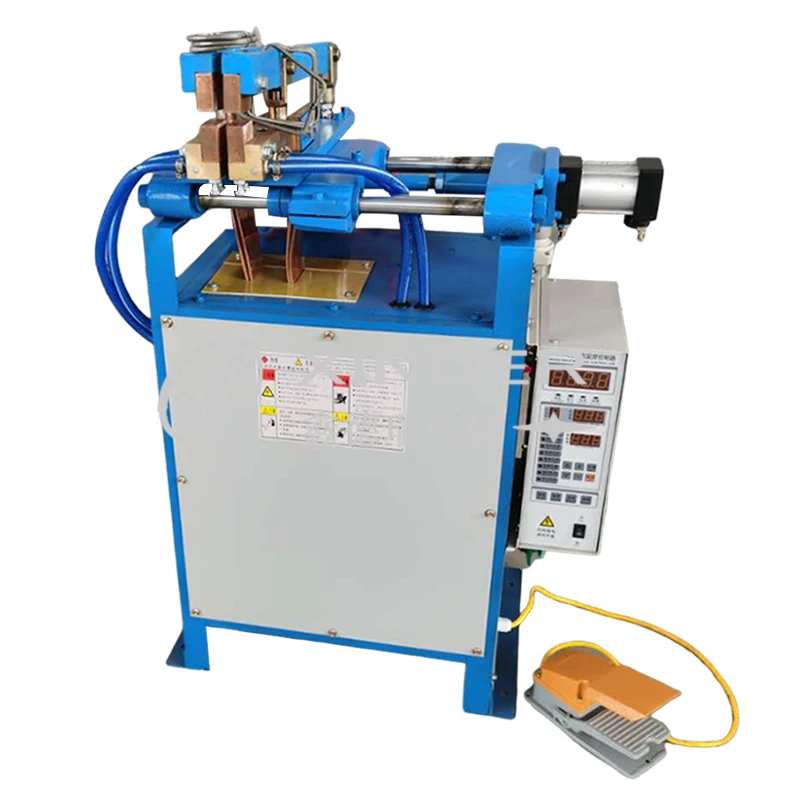 Pneumatic Handle Welding MachineSep . 13, 2024
 -
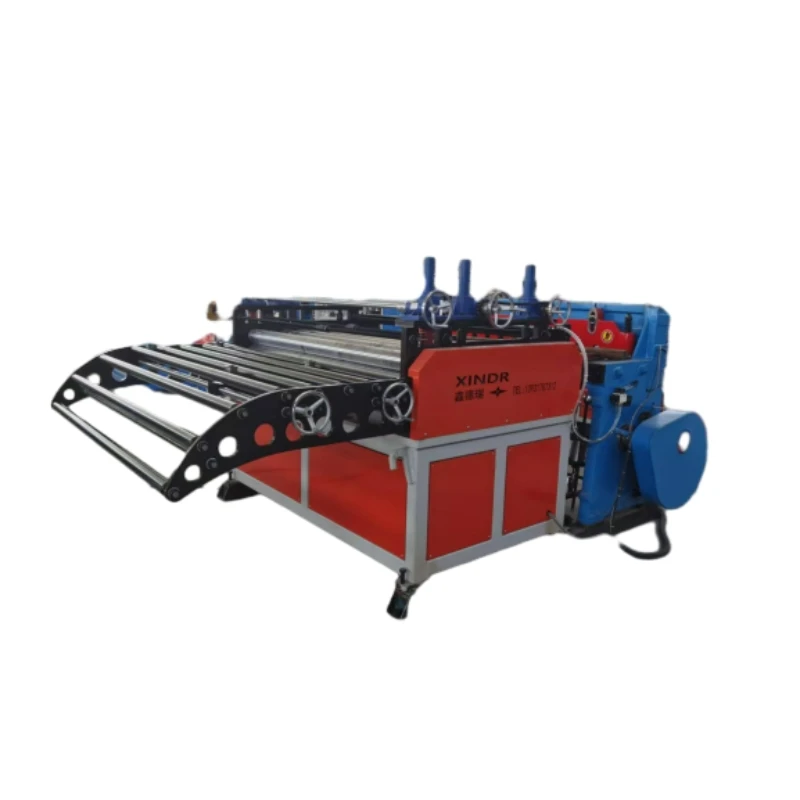 Fully Automatic Kaiping Production LineOct . 17, 2024
 -
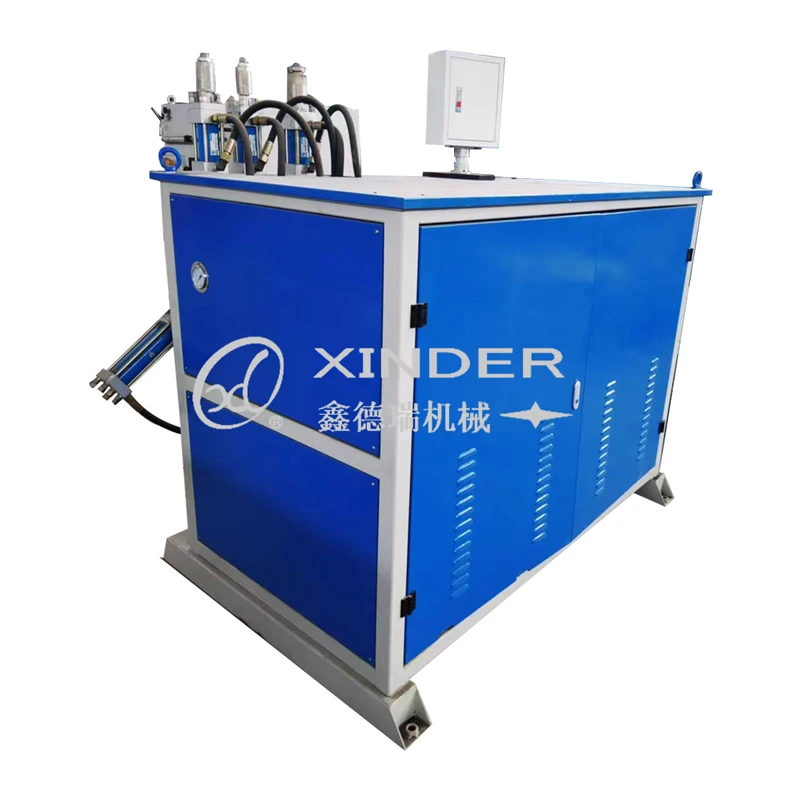 Fully Automatic Metal Bucket Lifting HeadphonesSep . 14, 2024